How to Install, Use, Vent, Level, and Clean a Compact Dryer
Compact dryers are a practical laundry solution for apartments, dorm rooms, RVs, small homes, and laundry areas where a full-size dryer will not fit. They are smaller, easier to place, and often more flexible than traditional dryers. However, because compact dryers are usually installed in tighter spaces, proper setup is very important.
If you are wondering how much space to install compact washer dryer units, how to vent a compact clothes dryer, how to level compact dryer appliances, or how to clean washer dryer compact machines, this guide walks you through the full process.
This article is based on the instruction manual for a Homydy Compact Dryer, SKU: CD001-150WH-USZX, Model: CD-6. The manual covers installation, wall mounting, exhaust venting, operation, maintenance, troubleshooting, and safety precautions. Although your exact model may be different, many compact dryers follow similar installation, use, cleaning, and troubleshooting principles. Always check your own product manual before installing or operating your dryer.
What Is a Compact Dryer?
A compact dryer is a smaller clothes dryer designed for light laundry loads and limited spaces. It is commonly used in apartments, condos, dorm rooms, RVs, and homes without a full laundry room.
The compact dryer shown in this manual has a drying capacity of about 5.5 lbs / 2.5 kg. That means it is not designed for large family laundry loads, heavy bedding, or oversized blankets. It works best for small everyday loads such as shirts, underwear, socks, small towels, baby clothes, and lightweight garments.
A compact dryer is convenient, but it still needs good airflow. If it is overloaded, pushed too close to the wall, or used with clogged filters, clothes may stay damp and drying time may become much longer.
What Does a 5.5 lb Drying Capacity Mean?
Many users do not know what 5.5 lbs of laundry looks like in real life. The number sounds technical, but the practical meaning is simple: this type of dryer is made for small loads.
| Example Load | Approximate Amount | Good for Compact Dryer? |
|---|---|---|
| Light daily clothing | 3-4 T-shirts + underwear + socks | Yes |
| Small mixed load | 2 T-shirts + 1 pair of jeans + 1 light towel | Usually yes |
| Towels only | 2-3 small towels | Yes, but may take longer |
| Heavy jeans load | 2-3 pairs of jeans | Not ideal |
| Bedding | Blankets, quilts, comforters | Usually no |
For better drying, leave enough room for the clothes to tumble freely. If the drum is packed too tightly, hot air cannot circulate properly. This may cause damp spots, wrinkles, longer drying times, and uneven results.
How Much Space to Install a Compact Washer Dryer?
One common search question is: how much space to install compact washer dryer?
The most important installation requirements are a dry and well-ventilated area, a firm and level surface, enough clearance behind the dryer, room for the exhaust vent, easy access to the power cord and filter, and enough space to open the door.
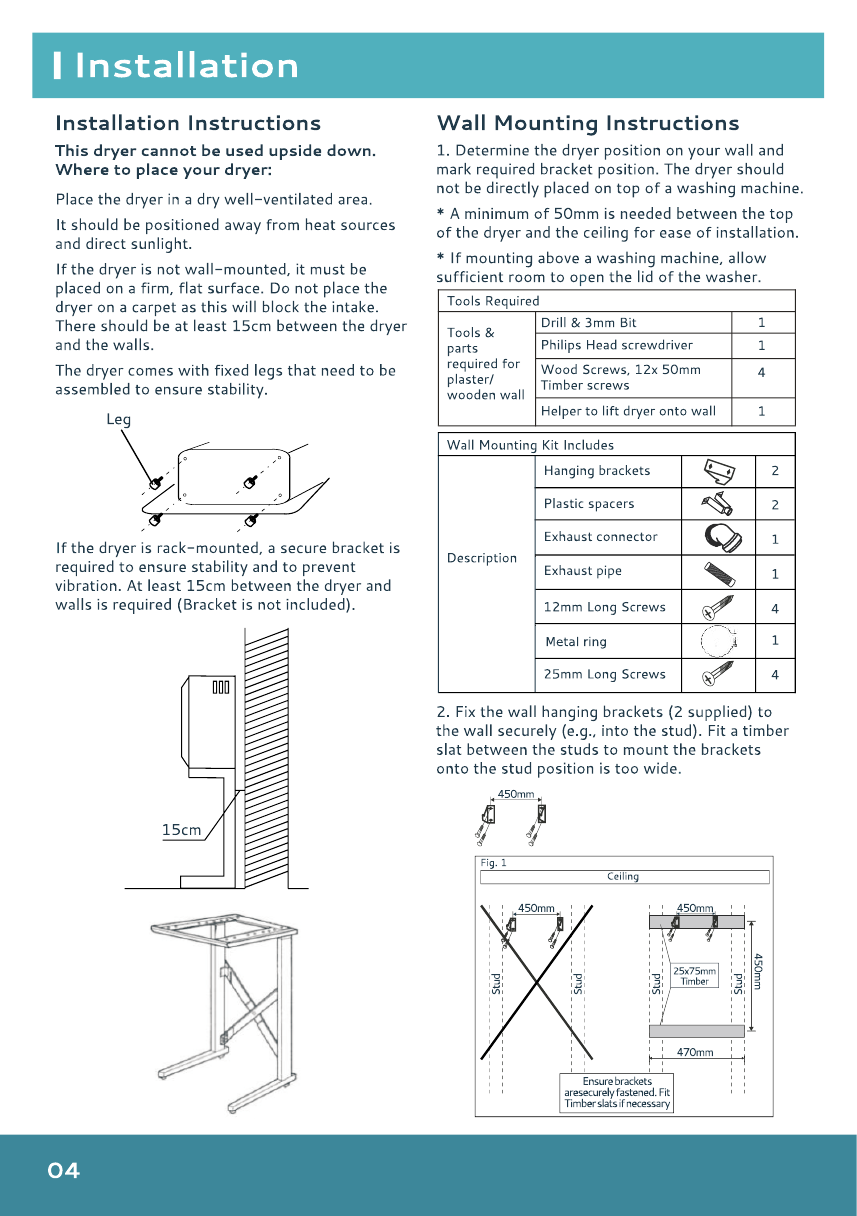
According to the manual, if the dryer is placed on a firm and flat surface, there should be at least 15 cm between the dryer and the wall. This space helps prevent the vent hose from being crushed and allows air to move properly.
Do not place the dryer in rain, direct sunlight, or wet areas. Do not install it inside a tight cabinet with no airflow. Do not place it on carpet, because carpet can block the air intake and reduce ventilation.
If you are installing a compact washer and dryer together, do not only measure the appliance body. You also need extra space for hoses, vents, cords, door opening, vibration clearance, and maintenance.
How to Level a Compact Dryer
If you search how to level compact dryer, the basic answer is: place the dryer on a flat, stable, heat-resistant surface and make sure it does not rock during operation.
A compact dryer that is not level may vibrate, move, make noise, or dry clothes unevenly. Before use, place the machine in its final position and gently press the top corners. If it rocks, adjust the surface or reposition the dryer until it stays stable.
To level a compact dryer, choose a solid surface, avoid carpet or soft flooring, keep the dryer upright, make sure the dryer does not lean, check that the rear vent is not blocked, and leave enough clearance behind the appliance.
If you are looking for how to level Magic Chef compact dryer or how to level Magic Chef compact dryer tutorial, the same general principle applies. However, always check the Magic Chef manual because feet, brackets, and installation details can vary by model.
Wall-Mounting a Compact Dryer
Some compact dryers can be wall-mounted to save floor space. The manual shows wall mounting parts such as hanging brackets, plastic spacers, an exhaust connector, an exhaust pipe, screws, and other hardware.
Wall mounting can be useful in a small laundry area, especially if the dryer is installed above a washing machine. However, it must be installed securely. The dryer should be mounted to a strong wooden stud or another solid structural support. It should not be attached only to weak drywall.
When wall-mounting a compact dryer, make sure the wall can support the dryer’s weight, the hanging brackets are firmly attached, the dryer is level after mounting, the exhaust pipe has enough space, the washer lid can still open if the dryer is above a washer, and the door can open fully.
If you are not experienced with wall mounting, it is safer to ask a qualified installer.
How to Vent a Compact Clothes Dryer
Another important question is how to vent a compact clothes dryer.
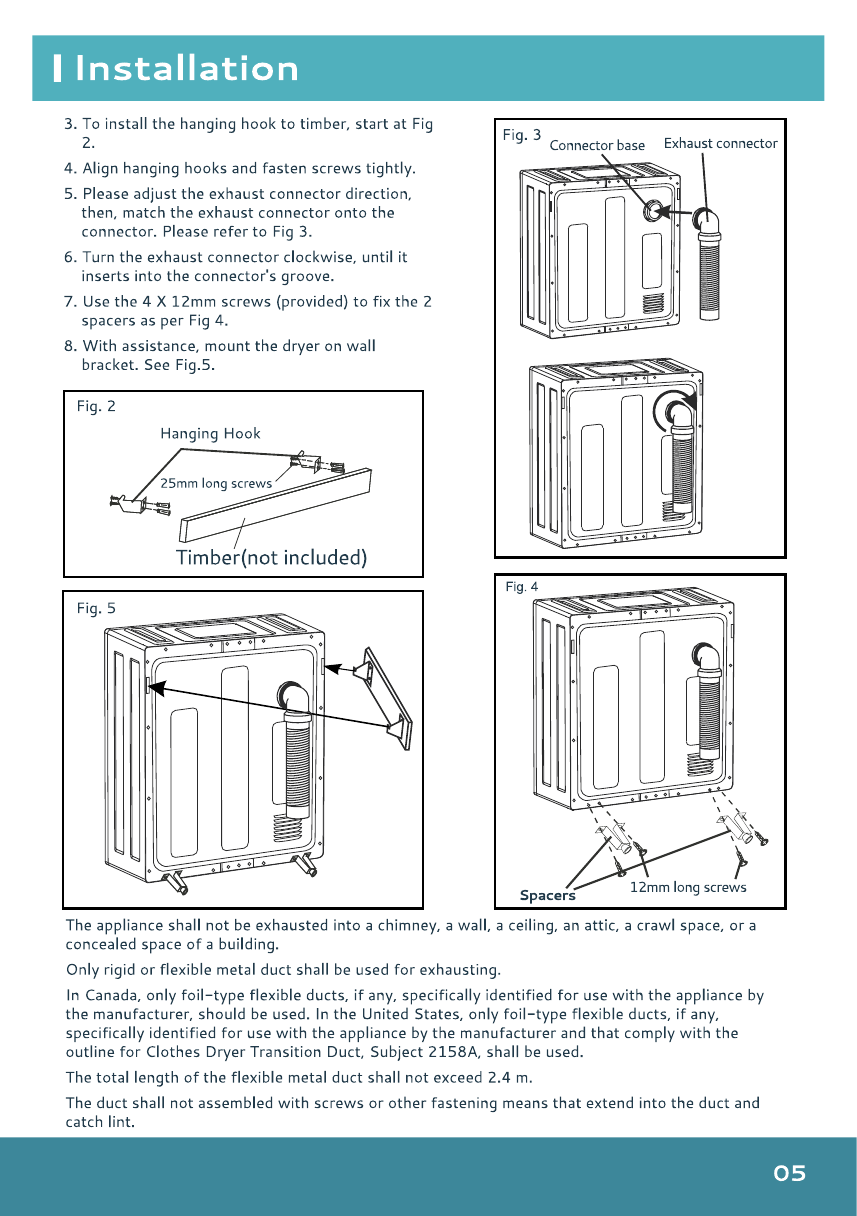
The dryer in this manual is a vented compact dryer. That means it releases warm, moist air through an exhaust outlet. Proper venting is very important for drying performance and safety.
A compact dryer should not vent into a chimney, wall cavity, ceiling, attic, crawl space, or concealed area of a building. The exhaust air needs to be directed safely, and the vent path should remain open.
To vent a compact dryer, find the exhaust vent on the back of the dryer, attach the exhaust connector securely, connect the exhaust pipe or approved vent hose, keep the vent hose short and straight, avoid sharp bends, do not crush the hose behind the dryer, and clean lint regularly to maintain airflow.
Poor venting can cause slow drying, overheating, damp laundry, and lint buildup. If your compact dryer takes too long to dry clothes, check the vent and filters first.
Vented vs Condenser vs Heat Pump Compact Dryers
This guide mainly focuses on a vented compact dryer. A vented dryer needs a safe way to exhaust warm, moist air.
However, not every apartment or small room has a good place for outdoor venting. If you cannot safely vent a dryer, you may want to choose a ventless compact dryer instead.
| Dryer Type | Needs Outdoor Vent? | Best For | Main Consideration |
|---|---|---|---|
| Vented compact dryer | Usually yes | Spaces with safe exhaust access | Needs proper venting and lint cleaning |
| Condenser compact dryer | No | Apartments without outdoor vent access | Water tank or drain needs maintenance |
| Heat pump compact dryer | No | Energy-saving compact laundry setups | Usually costs more and dries more slowly |
If you cannot vent outdoors safely, do not force an unsafe setup. A condenser or heat pump compact dryer may be a better choice.
How to Make Your Dryer Vent More Compact
Many people want to know how to make your dryer vent more compact because laundry areas are often tight.
The safest solution is not to crush the vent hose. Instead, use a shorter vent path, reduce unnecessary bends, and leave enough clearance behind the dryer. A compact-looking setup is not useful if airflow is blocked.
A good compact vent layout should have a short hose, a gentle curve instead of a sharp bend, a secure connection, enough wall clearance, and easy access for cleaning.
Do not push the dryer completely against the wall if it bends or blocks the vent hose. Poor airflow can make drying slower and may create safety risks.
How to Use a Compact Dryer
Before using a compact dryer, sort your clothes and check the care labels. Some clothes should not be tumble dried. Others may need low heat or air drying.
Before loading, empty all pockets, remove coins and small objects, close zippers, fasten buttons and buckles, turn zipped clothing inside out, separate dark and light items, and separate lint-producing items from lint-attracting items.
Place clothes into the dryer one item at a time. This reduces tangling and helps air circulate. Do not force too many items into the drum. If the door is hard to close, the load is probably too large.
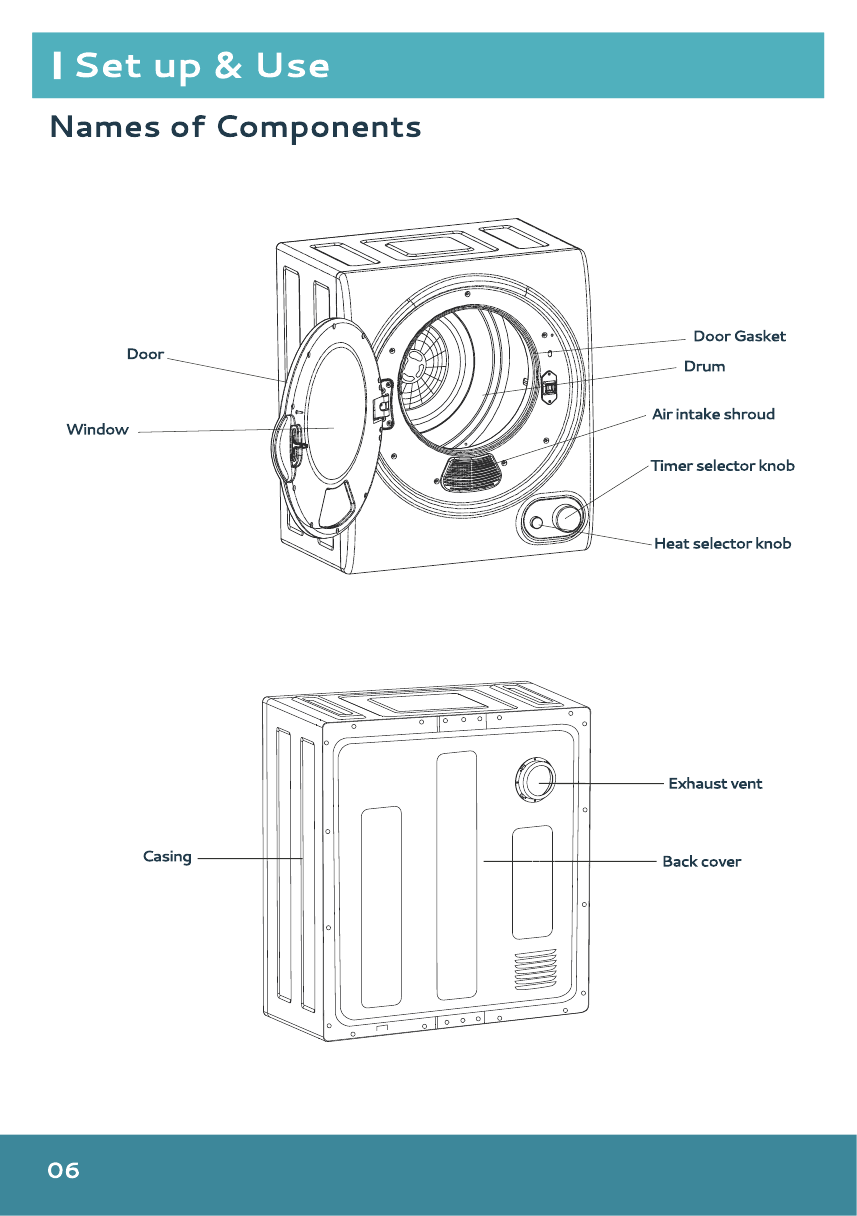
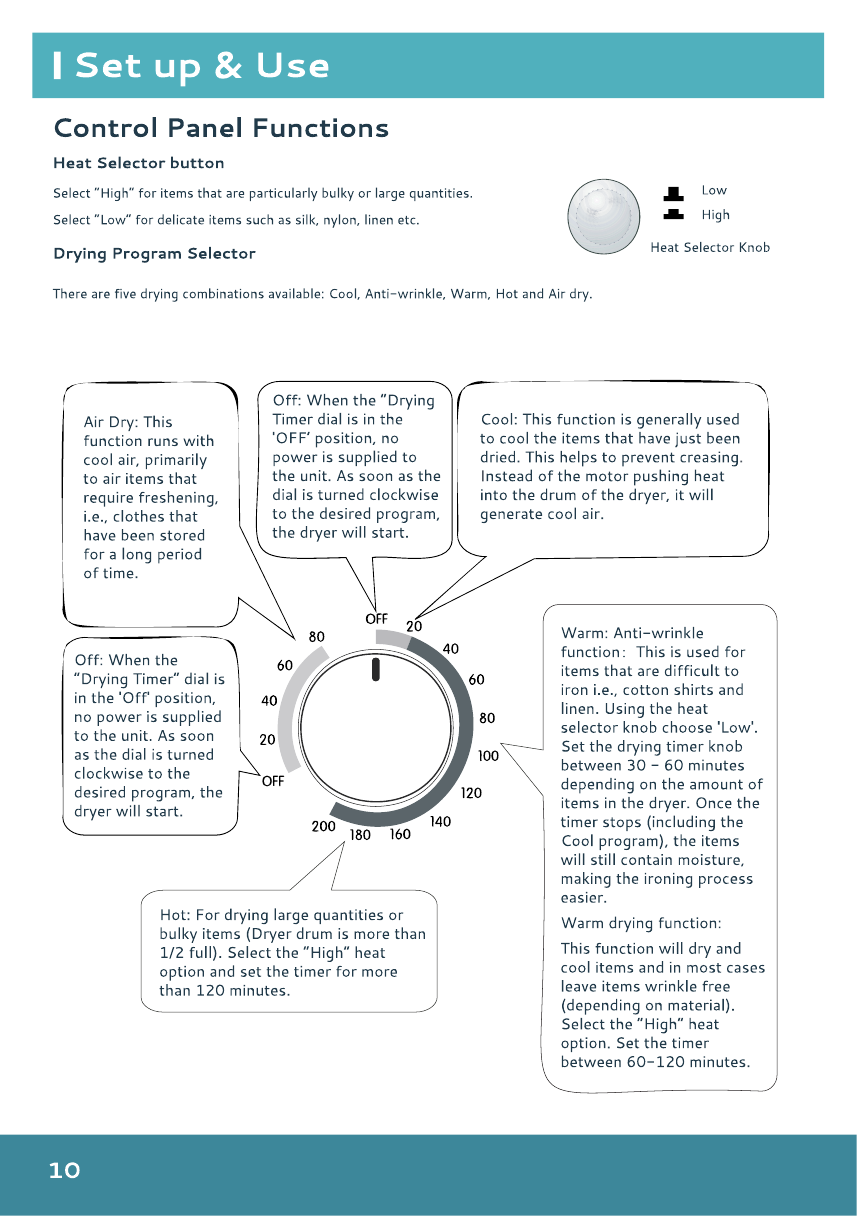
The manual includes a timer selector knob and a heat selector knob. The heat selector has Low and High settings. Low heat is better for delicate fabrics, lightweight garments, and wrinkle control. High heat is better for heavier cotton items or larger loads, as long as the fabric care label allows it.
High Heat vs Low Heat vs Air Dry
Choosing the right setting helps protect clothing and improve drying results.
| Setting | Best For | Avoid Using For | Practical Tip |
|---|---|---|---|
| High Heat | Towels, cotton clothing, heavier everyday laundry | Delicates, nylon, heat-sensitive fabrics | Use for thicker loads, but do not overload |
| Low Heat | Shirts, underwear, lightweight clothing, delicate items | Very heavy towels or thick items | Helps reduce shrinkage and wrinkles |
| Air Dry | Refreshing clothes, no-heat tumbling | Wet heavy laundry | Uses airflow without heat |
| Cool Cycle | Cooling clothes after drying | Replacing a full drying cycle | Helps reduce fabric temperature before unloading |
| Warm / Anti-wrinkle | Cotton shirts, linen, lighter loads | Very wet heavy laundry | Good for reducing wrinkles |
A compact dryer has less drum space than a full-size dryer. This means the setting and load size matter more. If clothes are still damp, reduce the load and dry again.
Magic Chef 2.6 cu.ft Compact Dryer: How to Use
The keyword magic chef 2.6 cu.ft compact dryer how to use is related to a different brand, but the basic compact dryer process is similar.
For many compact dryers, the general steps are to place the dryer on a level surface, make sure the vent is not blocked, plug the dryer into the correct grounded outlet, sort clothing by fabric type and weight, load a small amount of laundry, close the door securely, select the heat level, set the timer, start the dryer, and clean the lint filter after use.
However, Magic Chef models may have different capacity, controls, venting parts, and safety instructions. Always check the actual Magic Chef manual before operating that model.
How to Clean Washer Dryer Compact Appliances
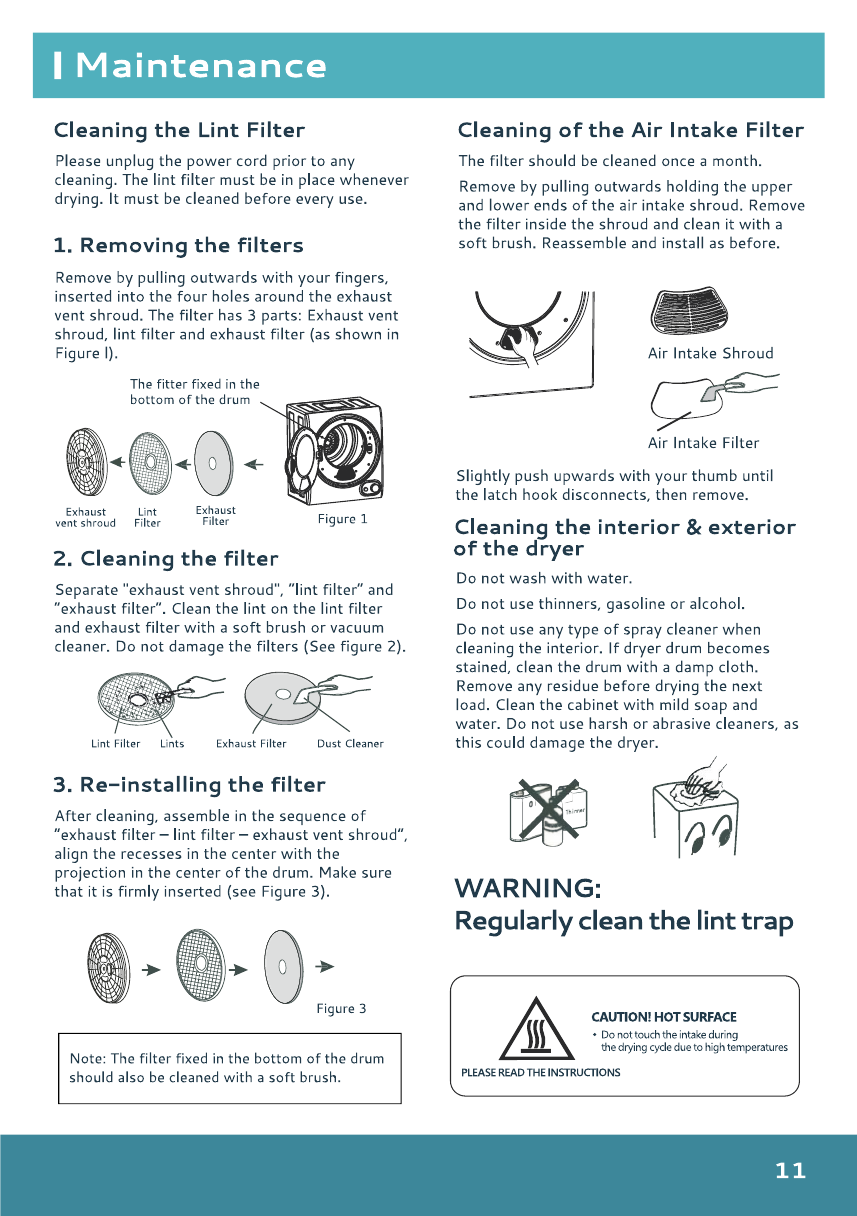
If you search how to clean washer dryer compact, start with the lint filter and air intake filter. Cleaning is not optional. It directly affects drying performance and safety.
Safety Warning: Clean the lint filter before or after every load. A clogged lint filter can reduce airflow, extend drying time, cause overheating, and increase fire risk.
To clean the lint filter, unplug the dryer, remove the lint filter from the back of the drum, separate the exhaust vent shroud, lint filter, and exhaust filter, clean the lint with a soft brush or vacuum, reassemble the filter parts in the correct order, and reinstall the filter securely before using the dryer again.
The air intake filter should also be cleaned regularly. Remove the air intake shroud, clean the filter with a soft brush, and reinstall it properly.
For the drum and exterior, do not wash the dryer with water. Do not use gasoline, alcohol, abrasive cleaners, or harsh chemicals. Wipe the surface with a soft damp cloth and mild soap, then dry it with a clean cloth.
Why Clothes Are Still Damp After Drying
If your laundry is not fully dry, the cause is usually simple. The most common problems are overloading, clogged filters, poor ventilation, or incorrect settings.
Possible causes include too many clothes in the drum, clogged filters, heavy and light clothes mixed together, laundry twisted or tangled, dryer placed in a poorly ventilated area, timer set too short, heat setting too low, or a blocked vent hose.
To fix the problem, reduce the load, clean the filters, untangle the clothes, and dry again. For large items, remove them during the cycle, shake them out, and place them back into the dryer.
Troubleshooting a Compact Dryer
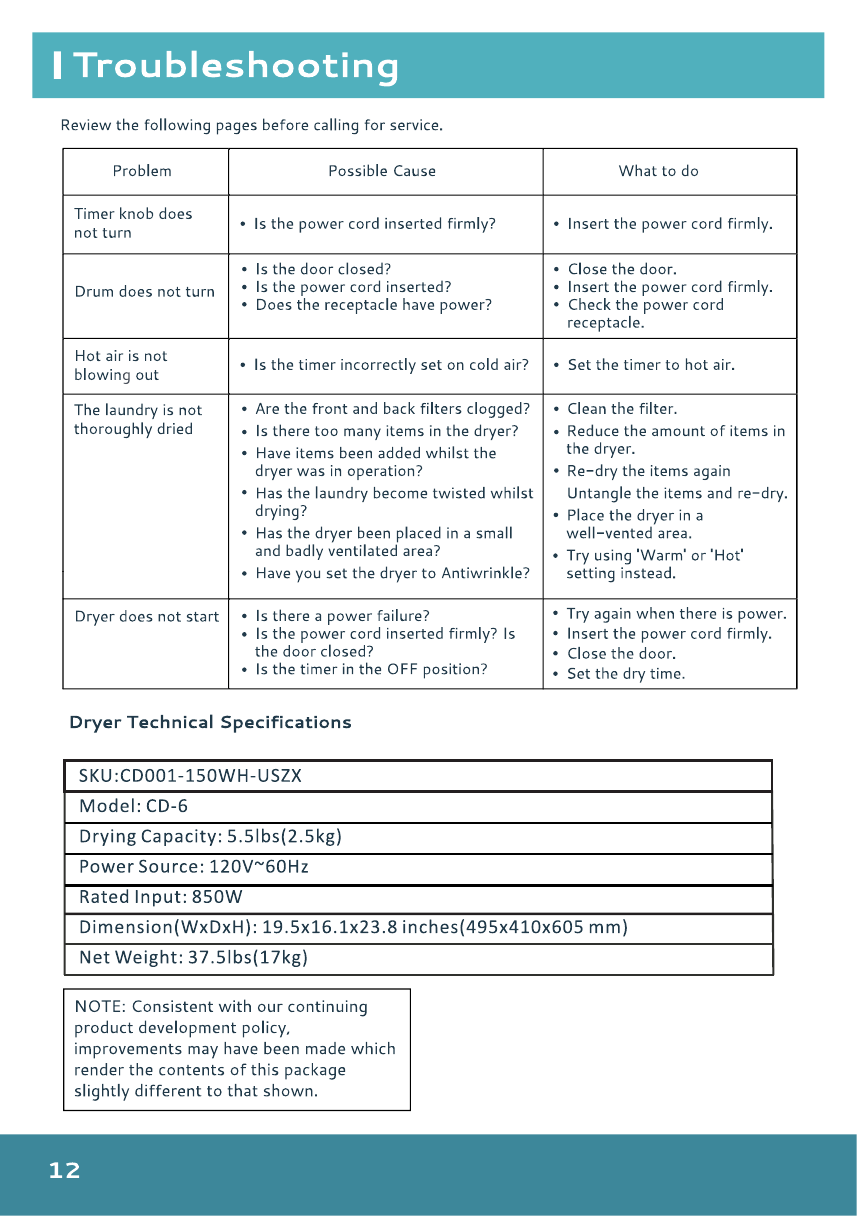
If the timer knob does not turn, check whether the power cord is firmly inserted into the outlet.
If the drum does not turn, check whether the door is closed, the power cord is connected, and the outlet has power.
If hot air is not blowing, check whether the timer is set to air dry or cool. Select a heated setting if the fabric allows it.
If the dryer does not start, check the power supply, door position, and timer setting.
If clothes are not drying properly, clean the filters first. A clogged lint filter is one of the most common reasons a compact dryer performs poorly.
How Much to Repair Magic Chef Compact Dryer?
The keyword how much to repair Magic Chef compact dryer usually means the user is trying to decide whether repair is worth it.
Repair cost depends on the problem, parts, labor, warranty, and local service pricing. Minor issues may not require repair at all. Before calling for service, check whether the dryer is plugged in, the door is closed, the timer is set correctly, the lint filters are clean, the vent is blocked, the load is too large, or the outlet is working.
If the issue involves the motor, heating element, thermostat, belt, wiring, or control parts, professional repair may be needed. For lower-cost compact dryers, compare the repair cost with the price of a replacement before making a decision.
Safety Tips for Compact Dryers
Fire Safety Warning: Do not place clothing or items exposed to gasoline, cooking oil, alcohol, solvents, wax, or other flammable substances into the dryer. These materials can create a fire risk, even after washing.
Do not dry foam rubber, rubber-backed items, waterproof covers, shower caps, or similar materials unless the care label and manual clearly allow it.
Do not reach into the dryer while the drum is moving. Do not allow children to play with or operate the appliance. Do not place heavy objects on top of the dryer. Do not block ventilation openings. Do not use the dryer upside down.
Also, do not stop the dryer before the cycle is finished unless you quickly remove and spread out all items so heat can dissipate.
The safest compact dryer is one that is installed correctly, vented properly, cleaned regularly, and never overloaded.
Final Thoughts
A compact dryer can be a great solution for small-space laundry, but it needs proper installation and maintenance. Leave enough clearance behind the dryer, keep it level, use the correct vent setup, avoid overloading, and clean the lint filter frequently.
If you are trying to understand how much space to install compact washer dryer units, remember to allow room for airflow, venting, the power cord, and maintenance access. If you need to know how to vent a compact clothes dryer, keep the exhaust path short, open, and safe. If you want to know how to clean washer dryer compact appliances, start with the lint filter, air intake filter, and drum area.
Most compact dryer problems come from simple causes: too many clothes, blocked airflow, clogged filters, poor venting, or incorrect settings. With the right setup and routine care, a compact dryer can be a reliable, space-saving appliance for everyday laundry.